battle, landmark, ancient
Battle of Pharsalus
Battle of Pharsalus was a battle fought on 6 June 48 BC at Farsala, in what is now Greece. It was part of the Caesar's Civil War, which ran from 49 BC to 45 BC. The recorded result: Caesarian victory.
See it on the globe Read the article

Where it sits in the Caesar's Civil War
Record
| Date | 6 June 48 BC | |
|---|---|---|
| Place | Farsala, Greece 39.300N, 22.383E | |
| Kind | Battle, ancient | |
| Territorial change | Most of the Eastern Roman provinces defect to Caesar | |
| Strength | 23,000+; 22,000 legionaries; 1,000 cavalry; ??? light infantry | 41,000–54,000+; 36,000–47,000 legionaries; 5,000–7,000 cavalry; Thousands of light infantry |
| Casualties and losses | 200–1,200 killed | 30,000–39,0006,000–15,000 killed |
| Commanders |
|
|


The ground today
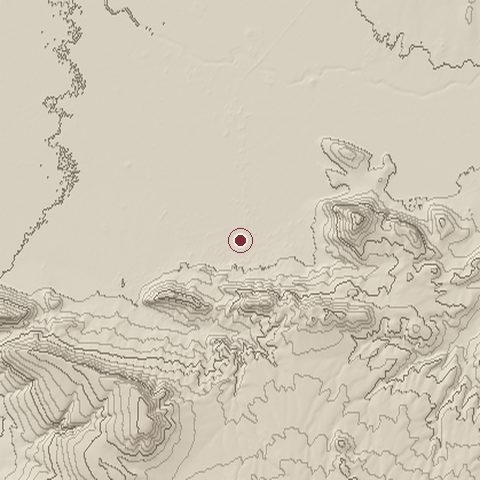
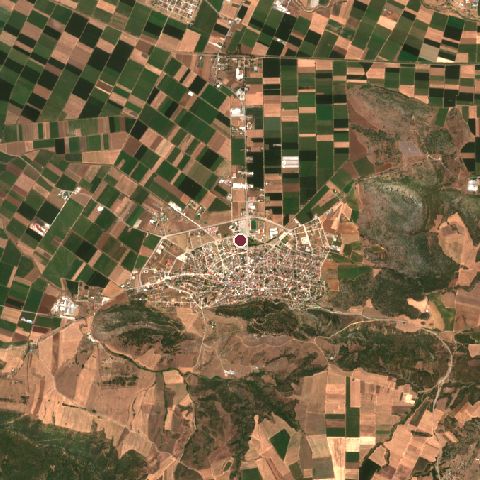
The recorded site stands at about 132 m; within 10.0 km the ground runs from 119 to 523 m, 405 m of relief, steep country and today it is 56% cropland, 21% tree cover, 13% grassland.
Elevation from the Copernicus DEM GLO-30 (ESA, Airbus); land cover from ESA WorldCover 2021 (CC BY 4.0), within about 5 km of the recorded site. Computed, not recorded.Nearest engagements
- Battle of Cynoscephalae 197 BC, 20 km NE
- Battle of Crannon 322 BC, 24 km N
- Battle of Mataraga and Petromagoula 1878, 30 km W
- Battle of Velestino 1897, 32 km E
- Battle of Callinicus 171 BC, 37 km N
In the same war
- Before: Siege of Salona 48 BC
- After: Battle of Dyrrhachium 10 July 48 BC
- All 26 engagements of Caesar's Civil War
Elsewhere in 48 BC
- Battle of Nicopolis Turkey
Battle of Pharsalus is one of 166 engagements of the 1st century BC in the atlas and one of 529 in present-day Greece.
Sources
Identity, coordinates, dates and the war from Wikidata Q203681, released under CC0. Result, belligerents, commanders, strength and casualties from the infobox of the English Wikipedia article Battle of Pharsalus, revision 1379786111, read 2026-11-14, licensed CC BY-SA 4.0; the article's text is not reproduced here. Present-day country and state from Natural Earth. Dates before 1582 follow the Julian calendar as recorded.