battle, landmark, Revolutionary and Napoleonic
Battle of Austerlitz
Battle of Austerlitz was a battle fought on 2 December 1805 at Slavkov u Brna, in what is now Czech Republic. It was part of the War of the Third Coalition, which ran from 1805 to 1806. The recorded result: French victory.
See it on the globe Read the article

Where it sits in the War of the Third Coalition
Record
| Date | 2 December 1805 | |
|---|---|---|
| Place | Slavkov u Brna, Czech Republic 49.128N, 16.762E | |
| Kind | Battle, Revolutionary and Napoleonic | |
| Territorial change | Dissolution of the Holy Roman Empire and creation of the Confederation of the Rhine | |
| Strength | 65,000–75,000 | |
| Commanders |
| |


The ground today
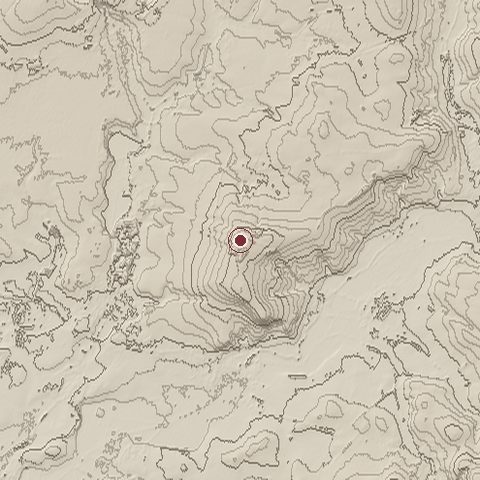
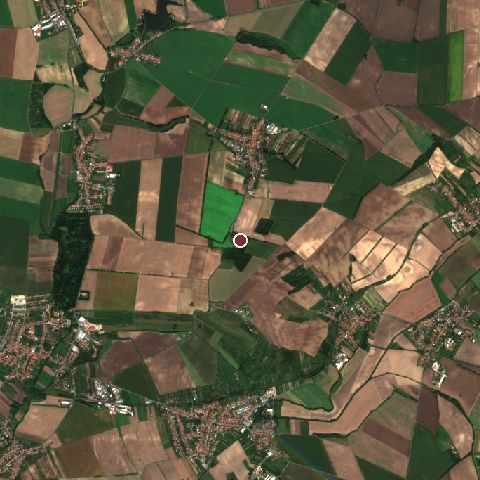
The recorded site stands at about 328 m; within 10.0 km the ground runs from 184 to 336 m, 152 m of relief, hilly country and today it is 75% cropland, 10% tree cover, 8% grassland.
Elevation from the Copernicus DEM GLO-30 (ESA, Airbus); land cover from ESA WorldCover 2021 (CC BY 4.0), within about 5 km of the recorded site. Computed, not recorded.Nearest engagements
- Siege of Brno (1645) 1645, 13 km NW
- Siege of Brno 1742, 14 km NW
- Fight at the Golden Deer grove 1945, 17 km E
- Battle of Ořechov 1945, 17 km W
- Battle at Wischau 1805, 24 km NE
In the same war
- Before: Battle at Wischau 28 November 1805
- After: Invasion of Naples 1806
- All 26 engagements of War of the Third Coalition
Elsewhere in 1805
- Battle of Ulm Germany
- Battle of Derna Libya
- Battle of Cape Ortegal Spain
- Battle of Ivankovac Serbia
- Battle of Diamond Rock France
Combat data (CDB90)
| Attacker: ALLIED ARMY | Defender: FR ARMY | |
| Strength | 85,400 | 73,200 |
| Casualties | 27,500 (32.2%) | 7,000 (9.6%) |
| Mission accomplishment, 1 to 10 | 2 | 10 |
| Outcome | defender won | |
| Duration | 1 day | |
| Front width | 13 km | 11.2 km |
| Attacker advanced | -7 km | |
From the US Army Concepts Analysis Agency Database of Battles (CDB90, battle 117), public domain, in the CC0 tidy edition by Jeffrey B. Arnold. Figures are the database's estimates, compiled in 1990 from published histories, and may differ from the Wikipedia infobox above.
Battle of Austerlitz is one of 3,694 engagements of the 19th century in the atlas and one of 188 in present-day Czech Republic.
Sources
Identity, coordinates, dates and the war from Wikidata Q134114, released under CC0. Result, belligerents, commanders, strength and casualties from the infobox of the English Wikipedia article Battle of Austerlitz, revision 1385355244, read 2026-11-14, licensed CC BY-SA 4.0; the article's text is not reproduced here. Present-day country and state from Natural Earth. Dates before 1582 follow the Julian calendar as recorded.